
What Does a Defibrillator Service Include? A UK Guide
Defibrillators are designed to carry out regular self-checks, but a successful self-test is not the same as a professional service.
For organisations responsible for one or more defibrillators, professional servicing provides an additional level of inspection, functional testing and documented maintenance. It can help identify issues that may not be obvious during routine visual checks and provides a clear record that the equipment has been professionally assessed.
At Defib Service, we provide professional defibrillator servicing for businesses, schools, sports clubs, healthcare organisations and multi-site estates across the UK.
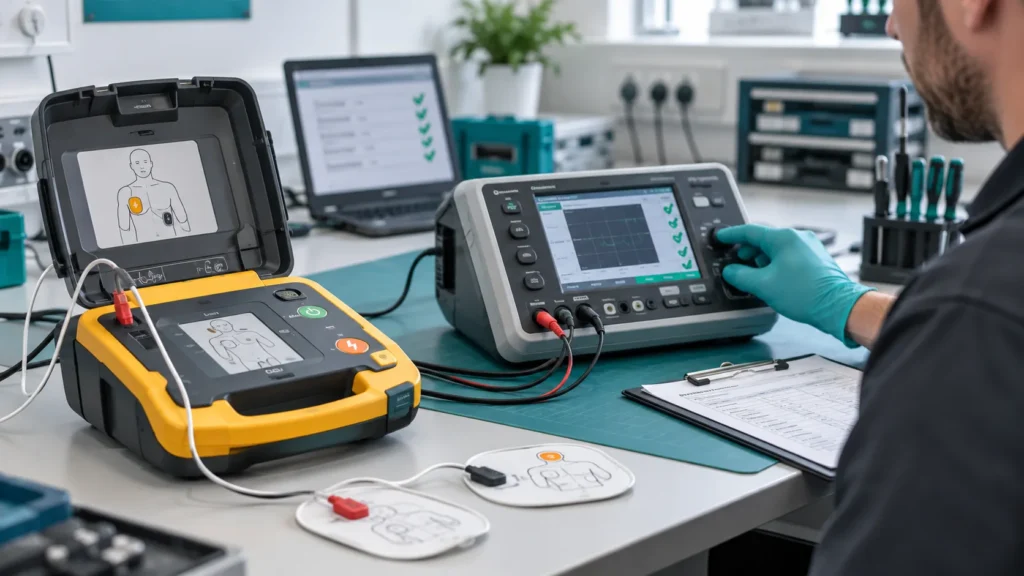
What Does a Professional Defibrillator Service Include?
A professional defibrillator service should go beyond simply checking whether the device displays a green status indicator. The purpose of the service is to assess the physical condition and operation of the defibrillator, review key consumable components, carry out functional testing and create a documented record of the work completed.
At Defib Service, our servicing process combines physical inspection, simulated rhythm testing, electrical output testing and maintenance checks.
Physical Inspection
Casing, controls, connectors, pads, accessories and visible condition are reviewed for damage, deterioration or missing items.
Functional Testing
Simulated shockable and non-shockable rhythms can be used to assess how the defibrillator responds under test conditions.
Documented Results
Each unit receives an individual service record, creating a clearer maintenance history and audit trail for the organisation.
Visual Condition and Physical Inspection
The first stage is a physical inspection of the defibrillator and its associated equipment. This can include checking the casing, controls, connectors, electrode connection points and general condition for signs of damage, contamination or deterioration.
The carry case, rescue accessories and other associated components can also be checked where applicable. Physical damage or missing accessories may not necessarily prevent a defibrillator from passing its own internal self-test, which is one reason routine owner checks and professional servicing should work alongside the device’s automated monitoring.
Defibrillator Functional Testing
A professional service should confirm that the defibrillator responds appropriately during simulated operating conditions.
A defibrillator analyser can generate simulated ECG rhythms such as ventricular fibrillation, ventricular tachycardia and normal sinus rhythm. This allows the technician to assess how the device responds to different simulated patient conditions rather than relying solely on the manufacturer’s internal self-test.
Ventricular Fibrillation and Ventricular Tachycardia Testing
Ventricular fibrillation and ventricular tachycardia are examples of abnormal heart rhythms that may require defibrillation. During servicing, specialist test equipment can simulate these rhythms so the technician can check whether the defibrillator correctly identifies a shockable rhythm and advises a shock where appropriate.
This provides additional functional evidence that the device is responding correctly under simulated emergency conditions.
Non-Shockable Rhythm Testing
Not every cardiac rhythm should receive a shock. A defibrillator must also be able to recognise situations where defibrillation is not appropriate.
During servicing, a normal sinus rhythm or another non-shockable rhythm can be simulated to confirm that the device correctly advises against delivering a shock. Testing both shockable and non-shockable rhythms helps assess the overall operation of the defibrillator more thoroughly.
Shock Output Verification
Where the device delivers a test shock, the defibrillator analyser can measure the electrical energy produced in joules. This allows the measured output to be compared with the expected output of the defibrillator and provides recorded evidence of the test result.
This is an important distinction between professional functional testing and a routine visual check. A green status indicator can confirm that the device has passed its own internal checks, but it does not provide the organisation with an independently measured record of shock output.
Battery Condition and Voltage Testing
A defibrillator battery may remain installed for several years, depending on the make and model. As part of a professional service, the battery should be checked for physical condition, replacement or expiry information where applicable and appropriate electrical performance.
At Defib Service, battery voltage can be assessed under physical load where the device design allows this. Battery condition should always be considered alongside the manufacturer’s recommended replacement intervals and the service history of the device.
Defibrillator Pad Inspection
Electrode pads are a critical part of any defibrillator. Pads generally have an expiry date and should also be checked for packaging damage, incorrect connection or other visible issues.
- Expiry date
- Packaging condition
- Correct pad type
- Connection to the defibrillator
- Adult or paediatric configuration where applicable
Expired, damaged or incorrectly connected pads may not perform as intended during an emergency and should be replaced in accordance with the manufacturer’s instructions.
Calibration and Specialist Test Equipment
Professional defibrillator servicing requires specialist test equipment capable of simulating heart rhythms and measuring the electrical output of the device.
At Defib Service, servicing is carried out using calibrated test equipment with UKAS-traceable standards where applicable. This provides traceability for the measurements recorded during the service and supports a more robust maintenance record.
Paediatric Function Testing
Some defibrillators have a dedicated paediatric mode, paediatric pads or a child key that reduces the energy delivered to younger patients. Where applicable, this functionality can also be tested during servicing.
This helps confirm that the device changes its operating behaviour appropriately when configured for paediatric use.
Defibrillator Software and Fault Checks
Depending on the make and model, a service may also involve checking the device for fault indicators, error messages or supported software information. Where the device allows it, certain faults or service alerts may be investigated or reset once the underlying issue has been addressed.
Not every fault can be repaired during a routine service. If a defibrillator develops a manufacturer-warranty fault, Defib Service can help coordinate communication with the manufacturer or authorised repairer and assist with the repair or replacement process.
Pads and Battery Expiry Tracking
Servicing should not end when the technician leaves site. Pads and batteries have finite service lives, and organisations with multiple defibrillators can easily lose track of expiry dates across different buildings or locations.
As part of our servicing support, Defib Service can record consumable expiry dates and help organisations monitor upcoming replacements. Replacement pads and batteries can also be supplied when required.
For organisations operating multiple defibrillators, central expiry tracking can reduce the risk of pads or batteries reaching their replacement date unnoticed.
Individual Defibrillator Service Reports
One of the biggest advantages of professional servicing is documentation. Each defibrillator serviced by Defib Service receives an individual service record detailing the checks and testing completed.
This creates a maintenance history for each device rather than relying solely on visual checks or informal records. For organisations with health and safety responsibilities, facilities teams, compliance teams or multiple locations, documented servicing provides a useful audit trail showing that active maintenance has taken place.
It does not replace the manufacturer’s own maintenance instructions, but it can form an important part of a wider defibrillator management programme.
Defibrillator Check vs Professional Service
Routine defibrillator checks normally involve confirming that the device indicates it is ready for use, checking pads and battery dates and looking for obvious damage or missing accessories.
A professional service goes further. It can involve specialist test equipment, simulated heart rhythms, shock output measurement, battery testing, consumable review and a documented service record.
Both have an important role. Routine checks should continue between professional services, while servicing provides an additional level of functional testing and documented evidence.
Does a Defibrillator Self-Test Replace Servicing?
Most modern defibrillators perform automatic internal self-tests. These are valuable and should never be ignored.
The British Heart Foundation also advises regular physical checks in addition to a defibrillator’s automated self-tests, including checking for faults, damage, missing accessories and electrode pad expiry.
However, a successful self-test is not the same as a professional service. A self-test primarily assesses the components and systems the manufacturer has designed the device to monitor internally. It does not necessarily provide an organisation with an independent measured shock output, an external physical inspection, documented consumable review or a professional service report.
For this reason, Defib Service recommends professional servicing at least annually alongside routine owner checks and the manufacturer’s maintenance guidance.
You can read more in our guide: How Often Should a Defibrillator Be Serviced?
How Long Does a Defibrillator Service Take?
The time required depends on the make and model of the defibrillator and the number of devices being serviced. For organisations with several defibrillators, servicing can normally be planned so that multiple units are completed during the same visit.
Multi-site organisations can also arrange servicing across several locations as part of a planned maintenance programme. This is particularly useful for academy trusts, universities, sports organisations, councils, housing associations and businesses operating across multiple sites.
Schools, academies and multi-academy trusts can also view our dedicated school defibrillator servicing option. Football clubs can view our football club defibrillator servicing page.
Can All Makes and Models Be Serviced?
Defib Service is manufacturer-independent. We service and test all major makes and models of defibrillator and can support organisations with mixed fleets containing equipment from different manufacturers.
This is useful for organisations that have acquired defibrillators at different times or inherited equipment across multiple sites. Rather than dealing with several different suppliers, a mixed defibrillator estate can be managed through one servicing provider.
What Happens if a Defibrillator Fails a Service?
If an issue is identified during servicing, the next step will depend on the nature of the fault. Some issues may simply require replacement pads, a new battery or further investigation.
Where a manufacturer fault is suspected, Defib Service can help coordinate the process with the manufacturer or authorised repairer. For serviced customers, a temporary loan defibrillator may also be available while a unit is away for repair, subject to availability and the circumstances of the job.
How Much Does a Defibrillator Service Cost?
Our standard professional defibrillator service is currently £145 + VAT per unit.
For organisations with multiple defibrillators or several locations, different pricing may be available depending on the number of devices and servicing requirements.
The service includes professional inspection, functional testing and individual reporting rather than simply checking the device’s visual status indicator.
Need a Servicing Quote?
View the full servicing service, what is included and how we support single devices and multi-site estates.
Do Businesses Need to Have Their Defibrillator Professionally Serviced?
There is no single legal rule requiring every business to arrange an annual third-party defibrillator service in exactly the same way.
However, organisations still have responsibilities to manage workplace health and safety appropriately and should follow the manufacturer’s maintenance instructions, carry out routine checks and replace pads and batteries when required.
For businesses managing health and safety compliance, professional servicing can provide additional evidence that the defibrillator is being actively maintained rather than relying solely on the device’s internal self-test.
A documented service record can also be useful for facilities management, audits, risk assessments and internal compliance procedures.
Some insurers, landlords, contractors or governing bodies may also specify maintenance requirements as part of their own policies or contractual arrangements. Organisations should therefore check any applicable insurance policy, contract, facilities-management agreement or sector-specific requirement rather than assuming the same rules apply in every situation.
Defib Service recommends professional servicing at least annually for organisations that want an additional level of functional testing and a documented maintenance record alongside routine owner checks and the manufacturer’s guidance.
Professional Defibrillator Servicing Across the UK
Defibrillators are emergency medical devices, and organisations responsible for them should have confidence that their equipment is properly maintained and ready for use when required.
Routine visual checks and automated self-tests remain important, but professional servicing adds another layer of inspection, functional testing, measurement and documentation.
Defib Service provides nationwide defibrillator servicing for individual devices and larger multi-site estates. Our service includes functional testing, shock output verification, calibration, pads and battery inspection, expiry tracking and individual service reporting.